
So, what is Artificial Intelligence (AI) anyway? For over a decade now, this term has been increasing in usage within our modern society. In fact, according to Google Trends, the use of the term has more than doubled since 2004—with an interesting spike in 2012
Whether you are fond of it or not, AI is everywhere! It’s on your phone, predicting every word you type, it’s embedded in the websites you visit, blasting advertisements on items you considered buying. It’s in newly updated surveillance software, detecting and recognizing faces of anyone that strolls by. Truly the list can go on.
A vital characteristic around AI, however, is that it is not a tech-centred replacement for the human brain, according to Greenwald. Artificial Intelligence simply categorizes the tasks done by a computer that were previously only achievable by humans (Greenwald, 2018). Let’s look at other definitions to catch a better understanding.
As claimed by Ed Burns, an executive editor at Search Enterprise AI, his take on AI is that it is a simulation of the human brain and its processes; carried out by a machine (most probably a computer of some kind). It works by “ingesting” training data and analysing this data to spot any patterns or other correlations. Burns goes on to say that the patterns are used to predict outcomes (Burns, 2021).
Where did AI come from?
Now that you understand the concept on what the concept of Artificial Intelligence is, let us briefly explore its origins and how it came to be the sophisticated system it is today.
A common misconception concerning AI is that it revolves around robots, which is not true, according to an article published in 2005 by the AI Magazine. The author elaborates on this idea saying that by 1944, Herb Simon had already laid the basis around information-processing for AI.
In AIs formative years, it was not purely the Information Technology field that influenced its development but a multitude of other seemly unrelated fields such as biology, experimental psychology, communication theory, game theory, mathematics, logic and philosophy, and linguistics.
Although AI received all this attention, it was only the last half-century where we have machines capable of computing for it. Turing’s seminal paper (published in 1950) was the first time the idea of AI was solidified; saying that a computing device could be programmed to behave intelligently.
In the 1950s Arthur Samuel had designed a program to play Checker’s as a way of testing the limitations of the assembly language (a language by which basic computer operations are written in) it was coded in—keep in mind that Checkers requires a moderate level of intelligence to understand. Furthermore, Samuel had designed this program to learn from previous games it has played with the user and was a “tremendous step towards Artificial Intelligence” (Buchanan, 2005).
Read the full article here.
It’s quite clear that artificial intelligence had progressed rapidly from that point forward and through the many years, artificial intelligence has gained popularity among many fields of study, making it the diverse system it is today.
Why is AI important?
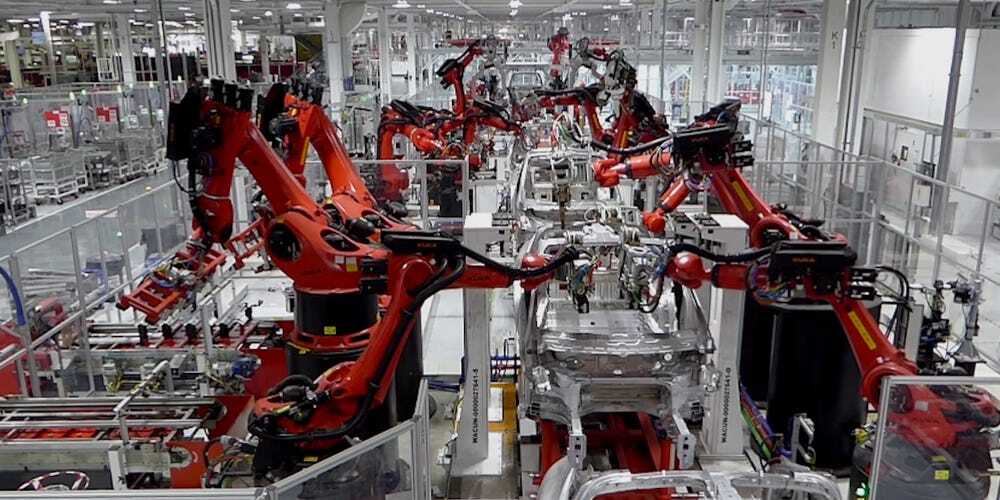
As previously mentioned, AI can do certain tasks that were previously only achievable by people; however, as there is an increase in its usage, repetitive or precision focused jobs soon became replaced by robots, similar to those in Tesla Giga Factories. Wait…how is this a good thing? It turns out that AI will be able to create new jobs, simply counter acting the jobs it automated
AI has also improved the health care sector tremendously. It has been able to automate certain processes in the hospital, predict diagnostics of ill or injured patients and even perform precise surgeries (Randall, 2019).
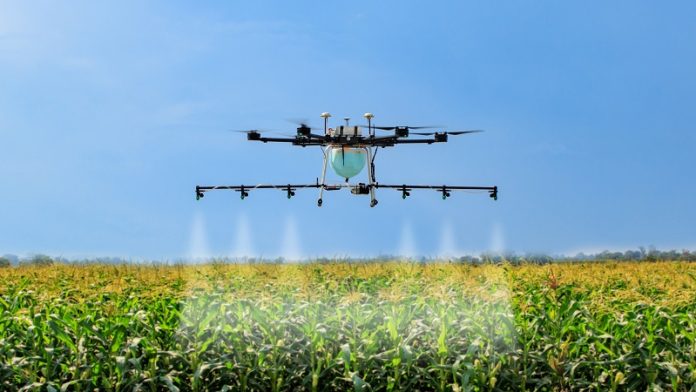
Ironically enough, AI has conquered a great deal of the agricultural sector more rapid than most sectors. For example, robotic machinery can be operated to harvest crops while AI systems are able to determine when crops should be watered depending on the moisture level in the soil with the aid of sensors.
Overall, AI is simply more convenient (in the average user’s life) but it is also a tool of great importance in science and the evolution of mankind. For example, weather predictions can be made well in advance (months) before they occur, helping us to prepare for any natural disasters that may take place. It is a calculator for engineers and other scientists to assist in optimizing their designs. The number of advantages AI provides are countless. Which is why it is important for us to understand them so that we may use it to our advantage, not only to improve ourselves but to enhance our future.

References
Buchanan, B. (2005). A (Very) Brief History of Artificial Intelligence. AI Magazine. Retrieved November 2, 2021, from https://www.proquest.com/docview/208132026/AB239EF4F41E4D86PQ/1?accountid=188233
Burns, E. (2021, August). What is artificial intelligence? Retrieved November 2, 2021, from Search Enterprise AI: https://searchenterpriseai.techtarget.com/definition/AI-Artificial-Intelligence
Randall, E. (2019). 5 Reasons Why Artificial Intelligence is Important to You. Newstex. Retrieved November 2, 2021, from https://www.proquest.com/docview/2302650856/ED0195A8D827475APQ/1?accountid=188233
Ted, G. (2018). Artificial Intelligence (A Special Report) — What Exactly Is Artificial Intelligence, Anyway? Everybody’s talking about AI these days. Here’s what all the fuss is about. Wall Street Journal. Retrieved November 2, 2021
Business Insider. (2016). https://www.businessinsider.com/tesla-to-build-gigafactory-2-europe-2016-11?IR=T. Retrieved from https://i.insider.com/58220b4e691e8877098b5634?width=1000&format=jpeg&auto=webp
CMR Surgical. (2019). British medtech firm CMR Surgical was profiled extensively over the course of 2019 as a key challenger to Intuitive Surgical’s market dominance. Retrieved November 4, 2021, from https://www.medicaldevice-network.com/wp-content/uploads/sites/11/2020/03/cmr-surgical-versius-clinical-setup-4-arms-00013-2.jpg
Roboticsbiz. (2021). Top 5 robot personal assistants for your home in 2021 [Updated]. Retrieved November 4, 2021, from https://roboticsbiz.com/wp-content/uploads/2019/05/buddy-696×447.jpg
 The AI Guy

